Why the Town Clerk’s model of teamwork, infrastructure, leadership training and accountability offers a practical frontline for Ben Kumumanya’s war against corruption
By Brian Mugenyi
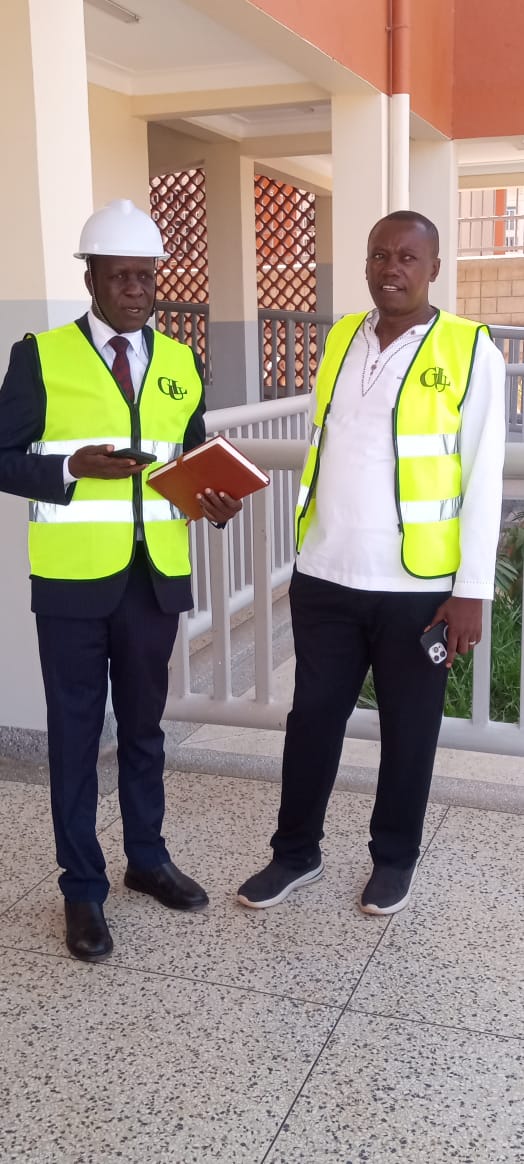
Wearing an helmet with the government assigned official duties at his command, Mr. Moses Otimong lives in the simplified means of a servant of government thereby serving as the Town clerk of Makindye Ssabagabo in Greater Kampala Metropolitan.
In the political language of Uganda, decentralisation is often described as the transfer of power and services from the centre to the people.
But in Makindye Ssabagabo Municipality, the meaning of decentralisation is becoming more practical.
It is a health centre opening its doors.
It is a local leader being trained to understand the law.
It is a road, a market or a sanitation programme expected to respond to a community need.
It is a municipality asking how every shilling can produce a measurable public benefit.
And behind much of that implementation is a figure rarely found at the centre of political headlines but whose office is critical to whether government works: Moses Otimong, the Town Clerk of Makindye Ssabagabo Municipality.
Otimong’s story is important because it speaks directly to the question now confronting Uganda’s local governments: Can decentralisation deliver development while simultaneously closing the spaces in which corruption thrives?
His answer, judging from his interventions in Makindye Ssabagabo, is that the two objectives cannot be separated.
A local government that plans properly, documents expenditure, respects procurement rules, trains its leaders and allows responsibilities to be followed is not only more efficient.
It is also harder for corruption to hide.
THE TOWN CLERK AT THE CENTRE OF THE MACHINE
The Town Clerk does not command the political visibility of a mayor or Member of Parliament.
Yet the office sits at the point where council decisions, budgets, procurement, local revenue, records and service delivery meet.
That makes the Town Clerk one of the most important links between government policy and what citizens eventually experience.
Reports on Makindye Ssabagabo describe Otimong as a technical officer working in an administrative environment where officers are increasingly expected to understand their assignments, implement them, document their work and remain answerable for their actions.
That is precisely where the anti-corruption argument begins.
Responsibility creates a trail.
A decision can be traced.
An expenditure can be examined.
A procurement can be questioned.
A project can be inspected.
And an officer can be held accountable.
The system becomes stronger when government is able to answer the simple question: Who was responsible, what was done and where did the money go?
OTIMONG’S DEVELOPMENT PHILOSOPHY
Otimong’s approach has been to connect administration with development.
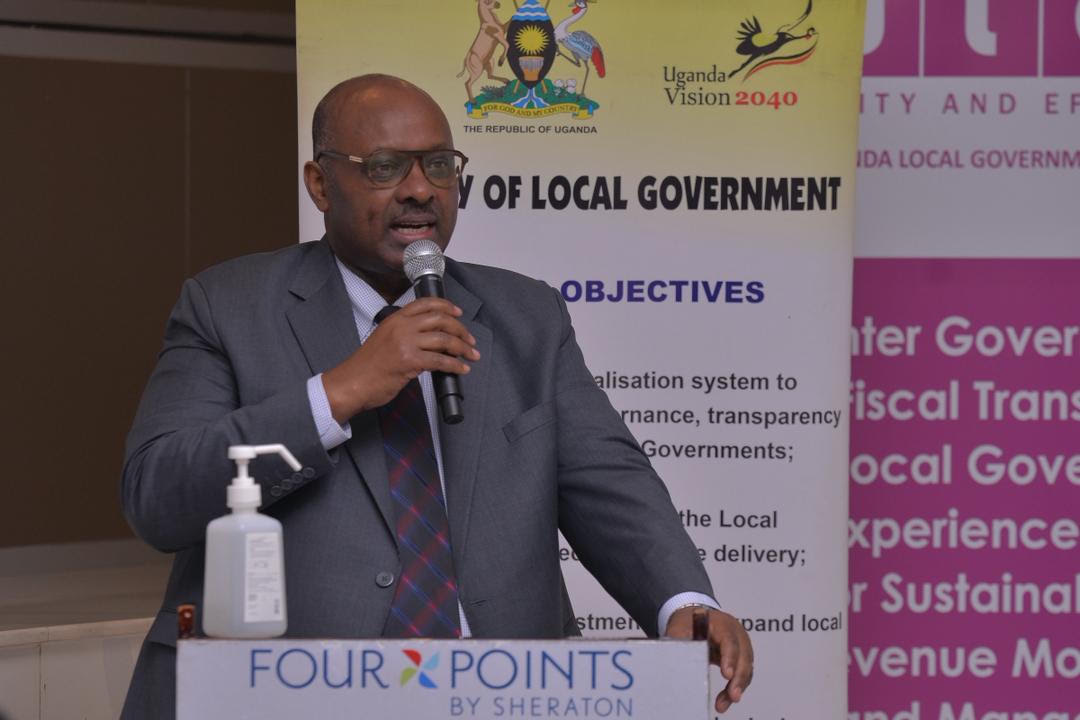
At the induction of newly elected leaders, he urged political and technical officers to work together, stressing sound planning, responsible budgeting and prudent financial management.
His message was unequivocal: public resources must produce measurable benefits for citizens.
That position is particularly important in an urbanising municipality such as Makindye Ssabagabo, where pressure on roads, health facilities, sanitation, education and other public services continues to grow.
The municipality’s own health department acknowledges the pressure.
Its official records identify increasing demand for healthcare, staffing gaps and the need to upgrade facilities to meet the needs of a growing population.
This means that local government has two simultaneous responsibilities.
It must attract and manage resources for development.
But it must also ensure that those resources are protected from waste, abuse and corruption.
Otimong has placed himself firmly on that second front.
MUTUNGO: A BUILDING THAT TESTS THE SYSTEM
The recent operationalisation of Mutungo Health Centre III offers perhaps the clearest illustration of the municipality’s development story.
The Government of Uganda has invested heavily in upgrading health infrastructure in the area, with the Mutungo project intended to bring a higher level of healthcare closer to residents.
Otimong has welcomed the investment while making a point that should resonate strongly with health policymakers: a building is only the beginning.
During the operationalisation, he argued that infrastructure must be accompanied by adequate health workers.
That concern was echoed by Mayor John Bosco Sserunkuma Galabuzi, who also called for more health workers, particularly because emergencies involving mothers and children require immediate clinical attention.
The medical side of the story was supplied by Dr Geoffrey Kisuze, who clarified that the event was an operationalisation rather than merely a commissioning ceremony.
He said Mutungo Health Centre III would provide outpatient services, immunisation, HIV/AIDS services and other clinical services, while assuring residents that health workers had been deployed and medicines and supplies would be provided.
That exchange captures the difference between infrastructure politics and service-delivery governance.
The first question is:
Has the building been constructed?
The second—and more important—is:
Does it work?
Otimong’s intervention places him on the second question.
THE NUMBERS BEHIND THE BUILDING
The investment is not insignificant.
Otimong said construction of Mutungo Health Centre III cost approximately Shs3.6 billion, while equipment was valued at about Shs360 million, putting the combined investment he cited at roughly Shs3.96 billion.
That scale of investment explains why accountability matters.
A project worth billions cannot be treated as merely another government building.
It must provide value.
It must remain functional.
It must be staffed.
Equipment must be maintained.
Medicines must reach patients.
And the community must be able to see the return on public investment.
This is where Otimong’s emphasis on financial discipline intersects with the broader anti-corruption campaign of the Ministry of Local Government.
GALABUZI: DEVELOPMENT MUST BUILD TRUST
Mayor John Bosco Sserunkuma Galabuzi provides the political voice to Otimong’s technical argument.
During the leadership induction, Galabuzi said residents are more willing to pay local taxes when they can see tangible development from the money collected.
His argument is powerful because it identifies the missing ingredient in many local governments: public trust.
According to Galabuzi, improvements in roads, markets and sanitation encourage citizens to see value in paying taxes.
This creates an important relationship between anti-corruption and economic development.
When citizens believe their money is being stolen, tax compliance suffers.
When they believe public money is producing services, confidence grows.
So the fight against corruption is not only about prosecuting an official who steals.
It is also about protecting the social contract between citizens and government.
SSERUKENYA AND THE PARLIAMENTARY DIMENSION
The municipality’s Member of Parliament, David Sserukenya, represents another important part of the accountability chain.
His parliamentary record shows him raising constituency concerns and demanding ministerial attention on matters affecting his electorate.
That parliamentary oversight matters because decentralisation cannot operate in isolation.
Municipal authorities need resources from central government.
They need ministries to respond to staffing and infrastructure gaps.
They need Parliament to scrutinise national allocations.
And citizens need elected representatives to question government when services fail.
The strength of Makindye Ssabagabo therefore lies not in one office alone, but in whether the Mayor, Town Clerk, councillors, MPs, technical officers and central government can work within their respective mandates.
That is precisely the model Otimong has been advocating.
THE LEADERSHIP CLASSROOM
One of Otimong’s most significant interventions may ultimately be less visible than Mutungo’s concrete walls.
It is leadership training.
At the induction of newly elected leaders, the Ministry of Local Government trained participants in development planning, programme-based budgeting, procurement and financial accountability.
Otimong welcomed the exercise because it helped political leaders understand their legal responsibilities, oversight functions and ethical obligations.
This is where his agenda meets Permanent Secretary Ben Kumumanya’s wider reform programme.
Kumumanya has repeatedly argued that decentralisation can only deliver if political and technical leaders understand their roles and work together.
He has also warned that recruitment corruption creates a vicious cycle: people who buy government jobs may seek to recover their investment through corruption once they enter public service.
That warning makes leadership induction more than an administrative ceremony.
It becomes a preventive anti-corruption tool.
Teach the mandate. Clarify responsibility. Strengthen oversight. Track expenditure. Demand results.
That is how institutions become harder to manipulate.
THE VILLAGE AS GOVERNMENT’S FRONT DOOR
Otimong has extended this philosophy down to LC I and LC II leadership.
He has described LC I as an important link between communities and government, arguing that grassroots leaders must turn their electoral mandate into service delivery, accountability and community development.
His vision is that grassroots leaders should monitor health, hygiene and sanitation while contributing to infrastructure development in roads, health centres and education.
They should also monitor government programmes, mobilise citizens and identify problems before those problems become municipal crises.
This is crucial to Kumumanya’s anti-corruption agenda.
Corruption rarely begins as a headline.
It can begin with a missing item.
A project that does not match its specifications.
A beneficiary who does not qualify.
A public asset that disappears.
A procurement process nobody understands.
A budget the citizen has never seen.
Grassroots leadership can become the first accountability alarm.
KUMUMANYA’S WAR—AND MAKINDYE’S OPPORTUNITY
Kumumanya’s message to local governments has been uncompromising: public resources must withstand scrutiny.
He has argued that decentralisation is intended to empower local governments to identify community priorities and implement development programmes, but that this can only succeed where transparency, accountability and integrity prevail.
He has also called for stronger cooperation between political leaders and technical officers rather than conflicts that delay development.
Makindye Ssabagabo appears to offer him a useful case study.
Here is a Town Clerk publicly committing his technical team to a corruption-free institution.
Here is a Mayor linking public trust to visible service delivery.
Here are leaders being trained in planning, budgeting and accountability.
Here is a health infrastructure project moving from construction to actual service delivery.
And here is a municipality where grassroots leaders are being told that their responsibility begins after the ballot—not with occupying a chair, but with serving citizens.
Otimong has said the municipality has agreed to walk the journey of building a corruption-free institution, with transparency, accountability and responsible stewardship of public resources as guiding principles.
That statement deserves more than applause.
It deserves institutional follow-through.
THE NEXT STEP: MAKE MAKINDYE A MODEL
If Kumumanya is serious about using decentralisation as a weapon against corruption, Makindye Ssabagabo provides an opportunity to demonstrate what that could look like.
The municipality could become a model where:
council budgets are easily accessible to citizens;
procurement information is systematically documented;
projects are physically inspected and publicly reported;
health infrastructure is matched with staffing and medicines;
local revenue is linked transparently to visible services;
LC I and LC II leaders are trained to identify and report abuse;
political and technical responsibilities are clearly separated;
whistleblowers and complainants are protected;
every major government investment has a visible accountability trail.
This would transform anti-corruption from a slogan into an operating system.
And that is where Otimong’s leadership becomes relevant.
He has already put his technical team on record as supporting transparency, accountability and value for money.
The next test is whether those commitments become measurable institutional practices.
THE LEGACY WILL BE IN THE SYSTEM
The temptation in local-government reporting is to celebrate a building, a road or a new programme.
But buildings age.
Roads deteriorate.
Officials leave office.
What survives is the system.
If Otimong succeeds in helping Makindye Ssabagabo build a technical culture in which public resources are planned for, procured transparently, implemented properly, documented and subjected to scrutiny, his most important contribution may not be the individual projects associated with his tenure.
It will be the culture he leaves behind.
And that is precisely why his work matters to Kumumanya’s national decentralisation and anti-corruption agenda.
The Permanent Secretary does not need every Town Clerk to become a politician.
He needs technical officers who understand that public administration is a public trust.
Otimong’s emerging model points in that direction.
His language is about planning.
His development agenda is about service delivery.
His health message is about turning infrastructure into functioning services.
His leadership programme is about understanding mandates.
And his anti-corruption message is about protecting every public resource from abuse.
That is the quiet machinery of decentralisation.
It does not always make the loudest political noise.
But when it works, a citizen feels the difference.
A mother reaches a health centre.
A child finds a functioning school.
A trader moves on a better road.
A taxpayer sees value.
A local leader understands the law.
And a public officer knows that somebody is watching.
That is the Makindye Ssabagabo story—and potentially one of the strongest local-government laboratories for Ben Kumumanya’s campaign to make decentralisation synonymous with development, integrity and accountable government.