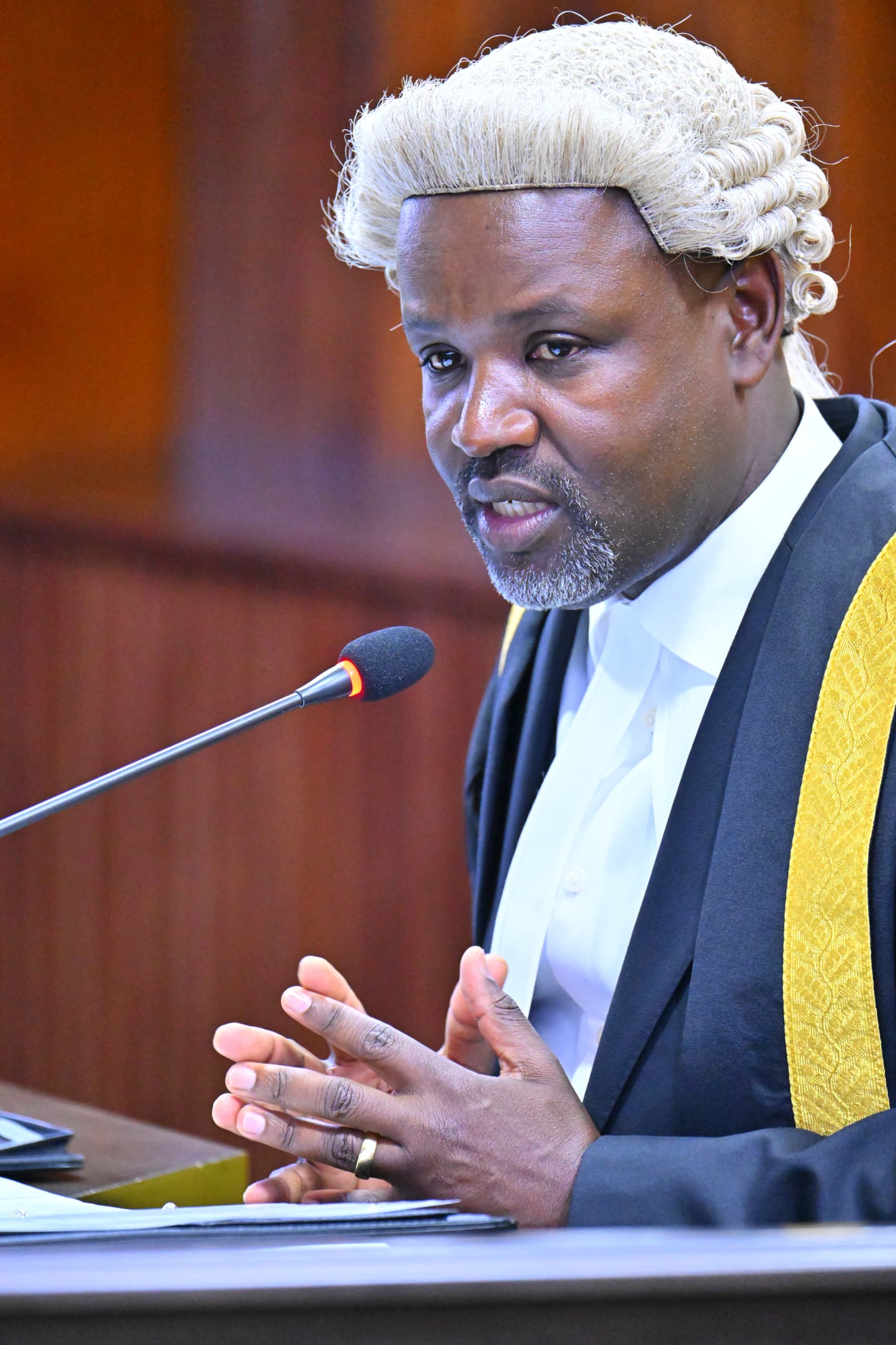
As breast cancer awareness month comes to an end, Deputy Speaker of Parliament Rt. Hon. Thomas Tayebwa has urged Members of Parliament to champion cancer screening and which can increase early detection in their constituencies as Uganda grapples with a rising burden of the disease.
Tayebwa made the call during his communication from the Chair in Thursday’s plenary sitting.
“As the month comes to an end, we should be ambassadors for early cancer screening and detection,” Tayebwa said.
“Whenever we have an opportunity in our constituencies, let us encourage everyone to go for cancer screening,” he added.
He also asked MPs to sensitise their constituents about healthy lifestyle choices and discourage behaviours that increase cancer risk.
“We should sensitise people on health and lifestyle choices by encouraging them to avoid behaviours that increase cancer risk, such as smoking and drinking alcohol,” Tayebwa said.
He noted that Uganda records more than 30,000 cancer cases annually, with the burden of this non-communicable diseases continuing to rise.
Many cancer patients in Uganda are diagnosed at advanced stages, contributing to high mortality rates. Cervical cancer is the most common cancer among women, followed by breast cancer, while prostate cancer is the leading cancer among men, followed by oesophageal cancer.
Tayebwa added that the government was decentralising cancer diagnosis and treatment services through the construction and equipping of four regional cancer centres.
In response to Tayebwa’s communication, Bukooli County Central MP Solomon Silwany called on the government to update parliament on its proposal to extend cancer screening services beyond regional centres to district-level hospitals.
“Ugandans are really suffering and travelling long distances to go to the regional centres for cancer,” Silwany said.
Immediate former Minister of Health and Government Chief Whip Jane Ruth Aceng acknowledged the challenges faced by patients and said the Uganda Cancer Institute conducts community outreach programmes to bring cancer screening services closer to the people.
“It is true the burden of cancer is big and many of our people are suffering from all the constituencies. They have to walk or get transport to move long distances to access cancer services,” Aceng said.
Aceng further revealed that the government planned to establish cancer units or institutes in all 18 regions of the country under the National Resistance Movement (NRM) manifesto.
“So far, we have in Acholi sub-region, Mbale sub-region is ongoing, Ankole sub-region in Mbarara and one will be in West Nile sub-region,” she said.
She explained that the facilities were expensive to establish and required both the Executive and Parliament to mobilise resources.
Aceng expressed confidence that the government would fulfil its commitment to expand cancer services across the country.
“Every region will be covered and that also goes for the cancer institutes in every region. It is in the manifesto and I believe it will be implemented,” she said.