From mobility to coffee, oil, water and digital commerce, Fred Ssenoga says Union is building a wider network connecting transport, products and consumers
By Brian Mugenyi
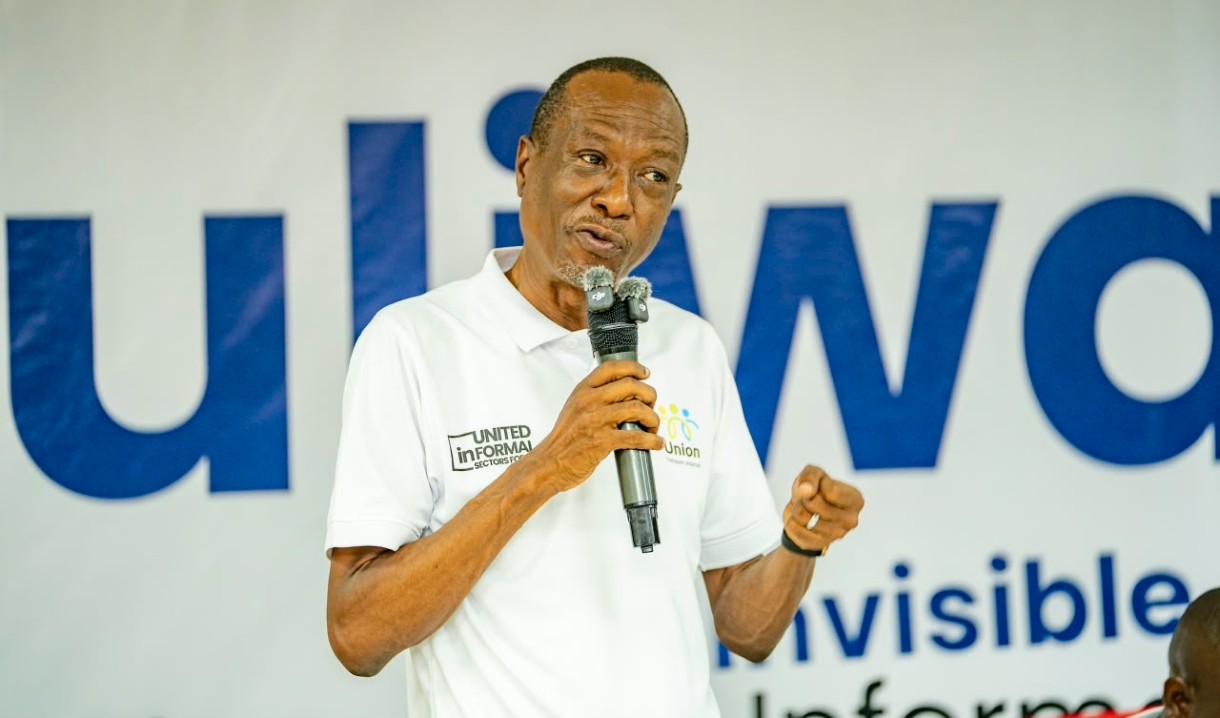
Kampala: When Fred Ssenoga, the Chief Executive Officer of Union Transport Alliance, describes the organisation as a “complete chain,” he is presenting a vision that stretches beyond the traditional business of moving people and goods.
The latest example is coffee.
Ssenoga says Union is developing a new coffee product for consumers, although the formulation is still under way and the product has not yet reached the market.
The proposed coffee is also being linked to the wider ambition of growing Uganda’s coffee economy towards a $2 billion annual industry.
But the coffee is only one piece of the emerging picture.
Union is also associated with products and services including Union Oil, Union Water and Union Sanitary Pads, while the organisation is developing its digital-commerce ambitions through Union Online Duuka.
Together, these activities point to a business model in which transport becomes the foundation for a wider ecosystem involving products, distribution, technology, commerce and consumers.
The coffee is not the story. The chain is
Coffee itself is not unusual.
What is notable is the attempt by a transport organisation to connect its existing network to the production and distribution of consumer products.
That is where Ssenoga’s description of Union as a “complete chain” becomes important.
Transport provides one link.
Digital technology provides another.
Products create another.
Distribution connects businesses to consumers.
The consumer completes the transaction.
Under this model, a transport operator is not only moving a passenger from one location to another. The same network can potentially support the movement of goods and connect businesses with customers.
The proposed coffee represents another link in that chain.
It connects the idea of transport with consumption.
From Union Oil to coffee
Union’s diversification did not begin with coffee.
Union Oil places the organisation within the operating economy of transport, where fuel and lubricants are essential to riders, drivers and other operators.
Union Water takes the brand into everyday consumer demand.
Union Sanitary Pads extends it into another essential household category.
Now coffee is being formulated.
On the surface, the products may appear unrelated.
But under the “complete chain” concept, they share a common economic possibility: they can be produced, marketed, distributed and consumed within an interconnected commercial network.
The emerging picture is therefore of a transport network with products and services attached to it.
When the road becomes a market
Uganda’s transport operators already possess something that many businesses spend heavily trying to build: reach.
Boda-boda riders and other transport operators move through communities every day.
They reach trading centres.
They reach markets.
They reach neighbourhoods.
They reach households.
That physical network can carry more than passengers.
It can potentially carry products.
This becomes particularly relevant as Union develops its digital-commerce ambitions through Union Online Duuka, an electronic marketplace intended to connect buyers, sellers and transport operators.
In such an ecosystem, transport becomes part of the distribution infrastructure.
A rider can potentially move a passenger, collect a product from a seller and deliver it to a customer.
The physical road network therefore becomes connected to a digital marketplace.
That is what gives practical meaning to Ssenoga’s description of Union as a “complete chain.”
Coffee and Uganda’s value-addition challenge
The coffee initiative also fits into Uganda’s wider economic conversation about value addition.
Uganda is a major coffee-producing country, but the economic opportunity does not end with growing and exporting the crop.
Value addition includes processing, branding, packaging, marketing and distributing finished products to consumers.
Union’s proposed coffee sits within that broader logic.
However, the product is still under formulation.
Its final specifications, packaging, pricing, production capacity and market-launch arrangements have yet to be established.
The significance at this stage is therefore the direction of the project rather than proven commercial results.
The ambition is to move coffee closer to the final consumer under a Ugandan brand while potentially using an existing transport and distribution network to reach the market.
The consumer sits at the centre
The people connected to the transport economy are not only workers.
They are also consumers and, in many cases, entrepreneurs.
A boda-boda rider needs fuel and oil.
The rider buys water.
The rider consumes food.
The rider has household needs.
The rider can also participate in digital commerce.
The same applies to drivers, shopkeepers, wholesalers, passengers and other members of the wider economy.
This creates a potential market around the same network.
The challenge for Union is to organise that demand into a commercially sustainable system capable of creating value for businesses and consumers.
Innovation can mean connecting what already exists
Innovation is often associated with new applications, artificial intelligence, electric motorcycles or other emerging technologies.
But the Union model suggests another form of innovation: connecting existing systems in new ways.
Transport already exists.
Coffee already exists.
Retail already exists.
Digital payments already exist.
Consumers already exist.
What changes is the architecture connecting them.
A product is developed.
A market is identified.
A transaction takes place.
A digital platform facilitates commerce.
A transport operator supports delivery.
The consumer receives the product.
Money circulates through the system.
The objective is to create a chain in which each link contributes to the next.
The chain must create real economic value
The concept will ultimately be tested by results.
The coffee will have to meet consumer expectations.
Products will have to maintain quality.
Distribution will have to be reliable.
Prices will have to be competitive.
Digital systems will have to function efficiently.
Most importantly, the wider ecosystem will have to translate innovation into tangible economic opportunities.
A growing catalogue of Union-branded products alone would not establish a successful economic chain.
The more important question is whether the model can generate jobs, incomes, markets, value addition and opportunities for entrepreneurs connected to the Alliance.
That is where the “complete chain” concept becomes an economic proposition rather than simply an organisational slogan.
The Union picture is becoming clearer
Viewed separately, Union Oil is an oil product.
Union Water is a consumer product.
Union Sanitary Pads address a household need.
The proposed coffee is a beverage.
Union Online Duuka represents digital commerce.
Transport provides mobility and distribution.
Viewed together, however, they point to a broader business model in which transport becomes the starting point for a wider ecosystem.
That is the meaning behind Ssenoga’s words:
“Union Transport Alliance is a complete chain.”
The coffee is another link.
Oil supports the transport economy.
Water serves everyday consumption.
Sanitary products respond to household demand.
Digital commerce connects buyers and sellers.
Transport connects people, businesses and products.
The consumer completes the cycle.
For Uganda, the broader economic question is whether locally built transport networks can increasingly serve not only as channels for movement, but also as platforms for production, distribution, consumption and wealth creation.
Union is attempting to explore that possibility.
For now, the coffee is still being formulated.
But the chain Ssenoga describes is already taking shape.
The road is no longer simply leading somewhere. At Union, the road itself is becoming part of the market.