By Brian Mugenyi
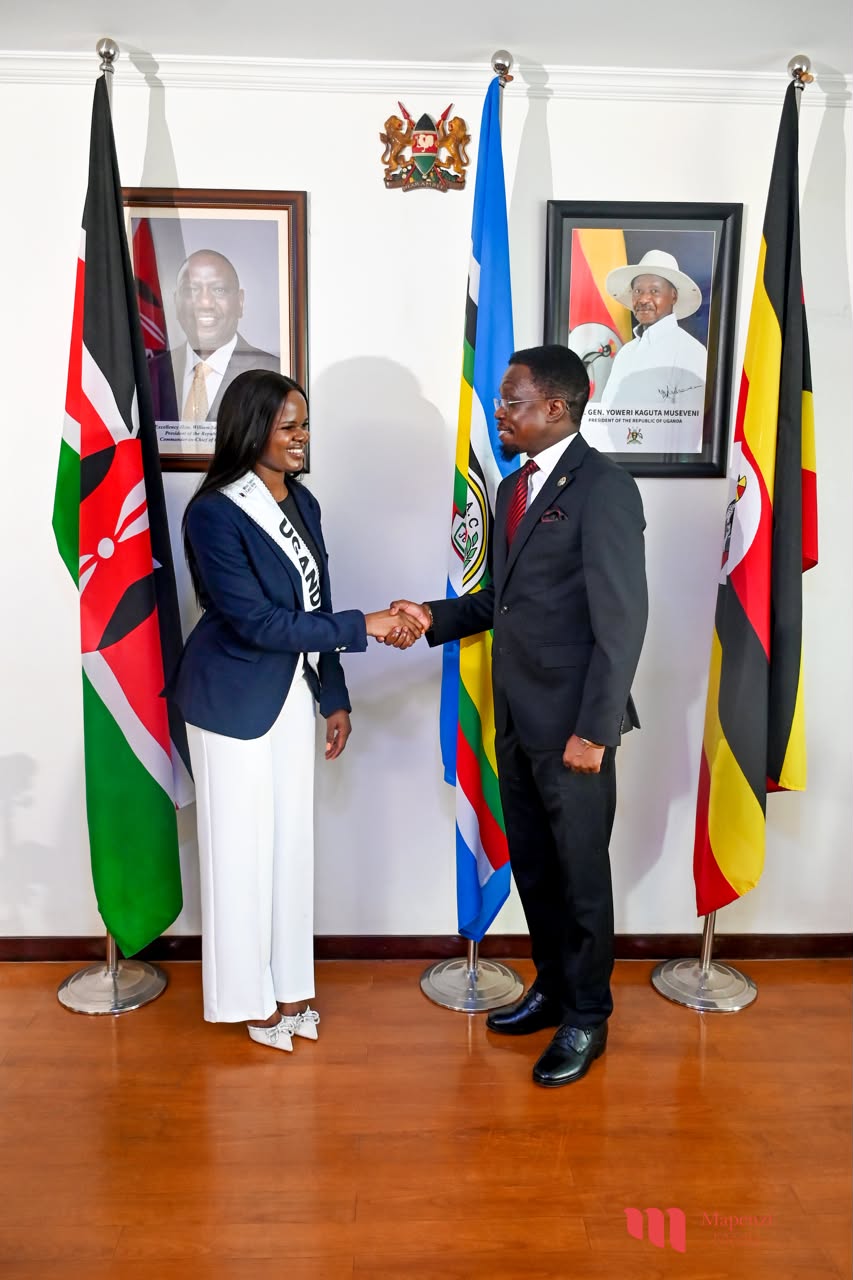
Kampala: Kenya’s High Commissioner to Uganda, Ambassador Ababu Namwamba, has challenged a new generation of East African tourism ambassadors to look beyond the region’s famous attractions and tell stories about destinations that remain largely undiscovered.
Speaking during an engagement with the Miss Tourism East Africa 2026 team in Kampala, Namwamba said the region has a wealth of tourism assets that have not received the international attention they deserve.
“Uganda has lakes waiting to be discovered,” Ambassador Namwamba told the contestants, urging them to use their visibility to expose the region’s less-known tourism destinations to the world.
His message placed the contestants at the centre of a broader conversation about how East Africa can use culture, beauty and young people’s influence to strengthen tourism.
Rather than viewing the pageant simply as a competition for a crown, Namwamba challenged the contestants to see themselves as storytellers and ambassadors whose responsibility extends beyond the stage.
The contestants, he said, have an opportunity to influence how the rest of the world sees East Africa by sharing the region’s landscapes, cultures, people and experiences.
Namwamba’s intervention comes as Uganda prepares to host the inaugural Miss Tourism East Africa finale in Kampala on September 12, bringing together contestants from across the region.
The event is expected to provide a platform for promoting East Africa as a connected tourism destination while allowing individual countries to showcase their distinctive attractions and cultures.
A wider tourism story
For Uganda, Namwamba’s remarks carry particular significance.
The country is endowed with a range of natural and cultural attractions, including lakes, rivers, forests, mountains, wildlife and diverse cultural traditions.
Yet international tourism marketing has often concentrated on a handful of established attractions, leaving other destinations with limited exposure.
Namwamba’s call therefore challenges tourism stakeholders to widen the narrative.
His reference to Uganda’s lakes is a reminder that tourism promotion does not necessarily require the discovery of entirely new attractions. It can also involve presenting familiar resources in new ways and connecting them to audiences that have never encountered them.
The Kenyan diplomat urged the contestants to become part of that process.
Through social media, international engagements and their public profiles, the contestants can reach audiences beyond the traditional tourism market and generate curiosity about places that may otherwise remain outside the traveler’s itinerary.
Beyond beauty
The ambassador’s message also reframes the role of beauty pageants in regional development.
The Miss Tourism East Africa contestants are being presented not merely as models competing for recognition, but as young women capable of carrying messages about culture, tourism and regional cooperation.
Uganda’s representative, Okoobah Shakira Okoobah, for example, has spoken about her passion for culture, peace and happiness and her desire to promote Uganda internationally.
Kadama, a Makerere University graduate with a Bachelor’s degree in Business Administration, has also linked her public platform to charitable work supporting deprived children.
Her story reflects the broader expectation being placed on the contestants: that a tourism crown should translate into public engagement and advocacy.
Namwamba’s challenge consequently puts substance behind the pageant’s glamour.
It asks the contestants to answer a bigger question — what can they do with the attention that comes with the crown?
East Africa’s collective advantage
The ambassador’s intervention also points to the potential of regional tourism cooperation.
East Africa has a combination of attractions that few destinations can match: wildlife, beaches, mountains, lakes, forests, cultural heritage, cuisine and historical sites spread across neighbouring countries.
A visitor attracted by Kenya’s wildlife, for instance, can potentially extend the journey into Uganda, Rwanda, Tanzania or other destinations in the region.
The challenge is to ensure that such journeys are supported by effective storytelling and marketing.
This is where Namwamba sees the contestants playing a role.
Their nationality, cultural backgrounds and individual stories can help present East Africa not as isolated tourism markets, but as a region with interconnected experiences.
The ambassadorial role
Namwamba’s engagement with the Miss Tourism East Africa team also reflects the diplomatic dimension of tourism.
Tourism is increasingly intertwined with cultural diplomacy, international relations and economic development.
By encouraging young people to tell positive stories about their countries, diplomats and tourism stakeholders can extend the reach of official tourism campaigns into communities and digital spaces where traditional advertising may have limited influence.
For the contestants, the message is clear: the crown should not end at the coronation.
It should become a platform for opening conversations about their countries and encouraging travellers to explore them.
As Uganda prepares for the September 12 finale, Namwamba has given the contestants a challenge that goes beyond beauty — to make East Africa’s tourism story visible to a world that may know the region’s famous destinations but has yet to discover many of its hidden ones.
And, in his words, Uganda still has lakes waiting to be discovered.